Analyzing Competitive Landscapes and Herbal Medicinal Products Market Share
The competitive environment of the botanical sector is currently characterized by a mix of "Heritage Giants" and "Digital Disruptors." A recent Herbal Medicinal Products Market Share analysis shows that established leaders like Dabur, Himalaya Wellness, and the Schwabe Group continue to hold significant portions of the global revenue. These companies benefit from decades of brand trust and vast, vertically integrated supply chains that allow them to control quality from "seed to shelf." However, their market share is being challenged by a new wave of "science-first" biotech firms that are focusing on the isolation of specific plant molecules for the pharmaceutical market. This "medicalization" of the industry is forcing heritage brands to invest heavily in clinical trials to defend their therapeutic claims against more scientifically rigorous newcomers.
Consolidation is a major theme in the current market cycle, as larger pharmaceutical entities look to "buy their way" into the natural health space. We are seeing a high volume of merger and acquisition activity, where multi-national giants acquire niche herbal brands to gain access to their specialized "clean-label" consumer base. This consolidation is bringing a higher level of professionalization to the sector, but it is also raising concerns about the "corporatization" of traditional medicine. For small-scale vendors, the key to maintaining market share is focusing on "hyper-transparency"—providing consumers with detailed data on the specific farm, harvest date, and extraction method of their products, a level of detail that large conglomerates often struggle to provide.
Market share is also becoming increasingly tied to "Ingredient Intellectual Property." Companies that successfully patent a unique extraction method or a specific herbal blend for a high-demand condition like "metabolic health" or "cognitive focus" can establish powerful market moats. We are seeing a rise in "Branded Ingredients," where a manufacturer sells a specific, clinically-backed extract (like a particular form of Ashwagandha) to other supplement companies. This "Intellectual Property" model is proving to be highly lucrative, allowing companies to capture value across the entire industry without having to manage their own retail consumer brands.
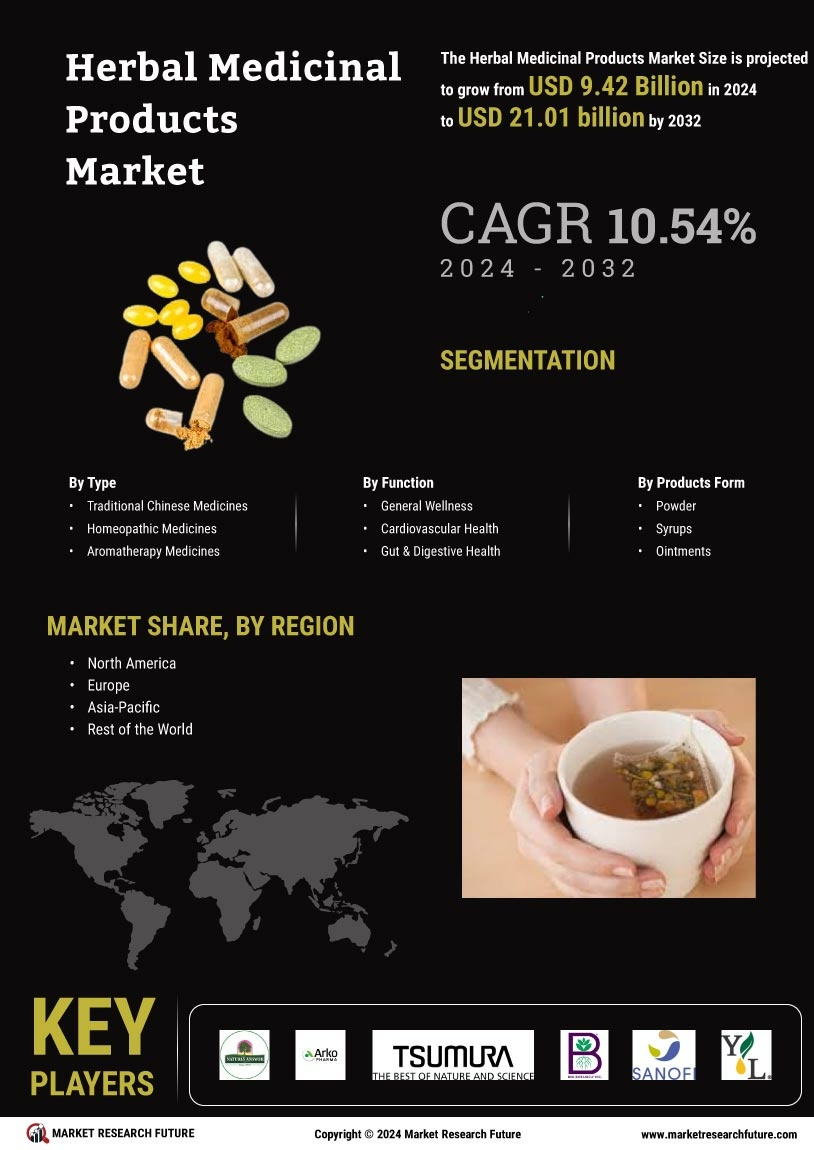
FAQ: Who are the top players in the herbal medicinal products market? Ans: Key global leaders include the Himalaya Wellness Company, Dabur India, Schwabe Group, Nature’s Way, and Gaia Herbs, though many pharmaceutical companies are now entering the space via acquisitions.
https://www.marketresearchfuture.com/reports/herbal-medicinal-products-market-4787
The competitive environment of the botanical sector is currently characterized by a mix of "Heritage Giants" and "Digital Disruptors." A recent Herbal Medicinal Products Market Share analysis shows that established leaders like Dabur, Himalaya Wellness, and the Schwabe Group continue to hold significant portions of the global revenue. These companies benefit from decades of brand trust and vast, vertically integrated supply chains that allow them to control quality from "seed to shelf." However, their market share is being challenged by a new wave of "science-first" biotech firms that are focusing on the isolation of specific plant molecules for the pharmaceutical market. This "medicalization" of the industry is forcing heritage brands to invest heavily in clinical trials to defend their therapeutic claims against more scientifically rigorous newcomers.
Consolidation is a major theme in the current market cycle, as larger pharmaceutical entities look to "buy their way" into the natural health space. We are seeing a high volume of merger and acquisition activity, where multi-national giants acquire niche herbal brands to gain access to their specialized "clean-label" consumer base. This consolidation is bringing a higher level of professionalization to the sector, but it is also raising concerns about the "corporatization" of traditional medicine. For small-scale vendors, the key to maintaining market share is focusing on "hyper-transparency"—providing consumers with detailed data on the specific farm, harvest date, and extraction method of their products, a level of detail that large conglomerates often struggle to provide.
Market share is also becoming increasingly tied to "Ingredient Intellectual Property." Companies that successfully patent a unique extraction method or a specific herbal blend for a high-demand condition like "metabolic health" or "cognitive focus" can establish powerful market moats. We are seeing a rise in "Branded Ingredients," where a manufacturer sells a specific, clinically-backed extract (like a particular form of Ashwagandha) to other supplement companies. This "Intellectual Property" model is proving to be highly lucrative, allowing companies to capture value across the entire industry without having to manage their own retail consumer brands.
FAQ: Who are the top players in the herbal medicinal products market? Ans: Key global leaders include the Himalaya Wellness Company, Dabur India, Schwabe Group, Nature’s Way, and Gaia Herbs, though many pharmaceutical companies are now entering the space via acquisitions.
https://www.marketresearchfuture.com/reports/herbal-medicinal-products-market-4787
Analyzing Competitive Landscapes and Herbal Medicinal Products Market Share
The competitive environment of the botanical sector is currently characterized by a mix of "Heritage Giants" and "Digital Disruptors." A recent Herbal Medicinal Products Market Share analysis shows that established leaders like Dabur, Himalaya Wellness, and the Schwabe Group continue to hold significant portions of the global revenue. These companies benefit from decades of brand trust and vast, vertically integrated supply chains that allow them to control quality from "seed to shelf." However, their market share is being challenged by a new wave of "science-first" biotech firms that are focusing on the isolation of specific plant molecules for the pharmaceutical market. This "medicalization" of the industry is forcing heritage brands to invest heavily in clinical trials to defend their therapeutic claims against more scientifically rigorous newcomers.
Consolidation is a major theme in the current market cycle, as larger pharmaceutical entities look to "buy their way" into the natural health space. We are seeing a high volume of merger and acquisition activity, where multi-national giants acquire niche herbal brands to gain access to their specialized "clean-label" consumer base. This consolidation is bringing a higher level of professionalization to the sector, but it is also raising concerns about the "corporatization" of traditional medicine. For small-scale vendors, the key to maintaining market share is focusing on "hyper-transparency"—providing consumers with detailed data on the specific farm, harvest date, and extraction method of their products, a level of detail that large conglomerates often struggle to provide.
Market share is also becoming increasingly tied to "Ingredient Intellectual Property." Companies that successfully patent a unique extraction method or a specific herbal blend for a high-demand condition like "metabolic health" or "cognitive focus" can establish powerful market moats. We are seeing a rise in "Branded Ingredients," where a manufacturer sells a specific, clinically-backed extract (like a particular form of Ashwagandha) to other supplement companies. This "Intellectual Property" model is proving to be highly lucrative, allowing companies to capture value across the entire industry without having to manage their own retail consumer brands.
FAQ: Who are the top players in the herbal medicinal products market? Ans: Key global leaders include the Himalaya Wellness Company, Dabur India, Schwabe Group, Nature’s Way, and Gaia Herbs, though many pharmaceutical companies are now entering the space via acquisitions.
https://www.marketresearchfuture.com/reports/herbal-medicinal-products-market-4787
0 Comments
·0 Shares
·216 Views
·0 Reviews